
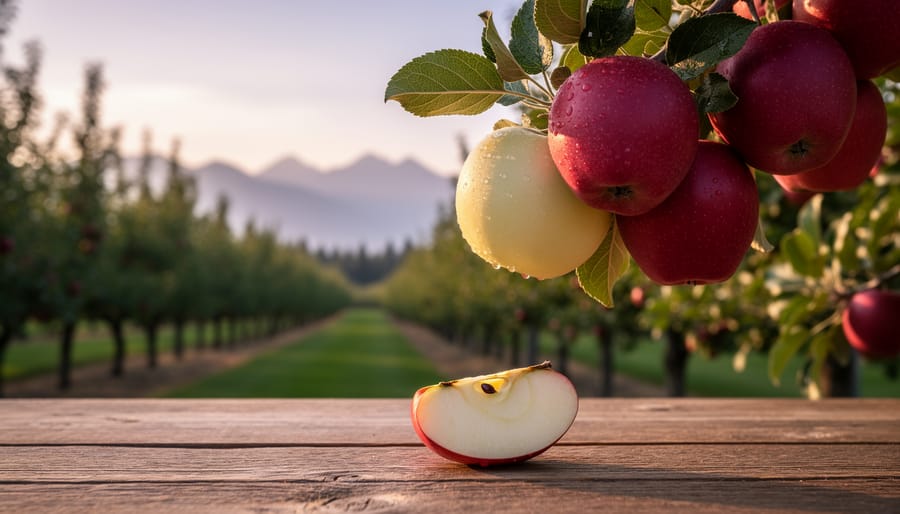
Okanagan Specialty Fruits transformed a simple question into a billion-dollar agricultural innovation story by asking what would happen if apples didn’t turn brown. Founded in 1996 by Neal and Louisa Carter in Summerland, British Columbia, this homegrown company spent nearly two decades developing the Arctic Apple, the first genetically engineered apple approved for commercial sale in North America. The breakthrough? A non-browning apple that uses gene silencing technology to prevent oxidation, keeping sliced apples fresh and appealing for days without chemical treatments.
The company’s journey from a small Okanagan orchard to global recognition didn’t follow the typical Silicon Valley startup playbook. Instead, it drew on the region’s century-old heritage of agricultural experimentation and fruit breeding excellence. The Carters navigated rigorous regulatory approval processes in both Canada and the United States, weathered public skepticism about GMO foods, and ultimately proved that patient capital and scientific rigor could coexist with entrepreneurial ambition in the heart of BC’s fruit-growing country.
In 2015, Intrexon Corporation (now Precigen) acquired Okanagan Specialty Fruits for $41 million, validating not just the technology but the broader potential of the Okanagan Valley as an incubator for agricultural innovation. Today, Arctic Apples are sold across North America under multiple varieties, from Arctic Golden to Arctic Fuji, representing a rare instance where a local company solved a global food waste problem while staying rooted in the landscape that inspired it. For entrepreneurs and investors eyeing opportunities in this valley famous for wine and orchards, the OSF story offers a masterclass in turning regional agricultural expertise into transformative commercial success.
The Birth of a Revolutionary Idea in Summerland
In the early 1990s, Neal Carter stood in his Summerland orchard watching perfectly good apples turn brown within minutes of being sliced. As a biotechnology entrepreneur who’d grown up surrounded by the Okanagan’s fruit-growing tradition, Carter saw more than just oxidized fruit, he saw a problem worth solving and an opportunity that would eventually reshape the global apple industry.
Carter’s vision was deceptively simple: create an apple that wouldn’t brown when cut. The problem was universal. Sliced apples turned unappetizing shades of brown almost immediately, leading to waste in lunch boxes, rejection by food service companies, and billions of pounds of perfectly edible fruit discarded annually. But the solution would require cutting-edge genetic science applied to one of agriculture’s oldest crops.
The Okanagan Valley proved the perfect crucible for this radical idea. Unlike tech startups that can launch from anywhere with a laptop and WiFi, agricultural innovation demands specific resources, and Summerland had them in abundance. The town hosted the Pacific Agri-Food Research Centre, where Agriculture and Agri-Food Canada scientists had spent decades studying fruit breeding and genetics. This wasn’t just proximity to knowledge, it was access to the minds who understood apple genetics at the molecular level.
The Okanagan’s combination of research infrastructure, deep farming expertise, and willingness to embrace agricultural innovation created the only environment where Arctic Apples could have been born.
Carter founded Okanagan Specialty Fruits in 1996, building his laboratory and eventually his test orchards in the heart of British Columbia’s fruit belt. The region’s established reputation for producing premium apples meant he could recruit experienced growers who understood commercial apple production inside and out. These weren’t academic scientists working in isolation, they were people who knew soil, climate, pest pressure, and market demands.
The Okanagan’s climate offered another advantage: ideal growing conditions that let Carter test his modified varieties under the same conditions where commercial apples would eventually be produced. He could observe how his non-browning trees performed through harsh winters, spring frosts, and hot summer days, real-world conditions that lab work alone could never replicate. This hands-on testing ground, combined with the Valley’s existing apple-growing infrastructure, transformed an ambitious scientific concept into a viable commercial product rooted firmly in Okanagan soil.
What Makes Arctic Apples Different
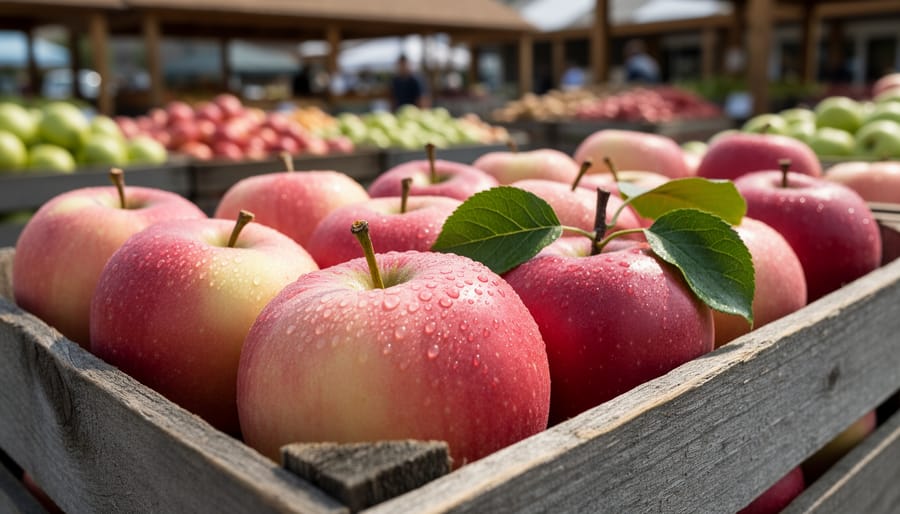
The secret behind Arctic Apples is simpler than most people expect. While traditional apples turn brown within minutes of being cut, Arctic varieties stay crisp and white for hours. No chemical dips. No additives. Just a small genetic tweak that prevents the oxidation cascade happening in your lunch bag right now.
Regular apples contain an enzyme called polyphenol oxidase, or PPO, which triggers browning when apple cells break open and react with oxygen. Okanagan Specialty Fruits used Arctic apple gene-silencing technology to turn down PPO production, much like lowering the volume on a radio. The apple still functions normally in every other way. It just doesn’t brown.
The modification isn’t introducing foreign DNA. Scientists identified the specific apple genes responsible for PPO, then inserted copies of those same genes in reverse orientation. This triggers a natural cellular mechanism where the plant essentially silences its own browning genes. Think of it as the apple telling itself to stop producing the enzyme that causes the problem.
This matters for practical reasons beyond aesthetics. North Americans waste roughly 40 percent of the fresh produce they buy, and browning drives much of that disposal. Parents toss half-eaten apple slices. Restaurants discard perfectly good fruit because cut apples in salads look unappetizing. Food service operations spend time and money treating apples with calcium ascorbate or lemon juice, methods that alter taste and still only delay browning.
Arctic Apples remove these barriers. Cafeterias can prep fruit hours in advance. Families pack sliced apples without watching them turn brown by lunch. The innovation addresses a genuine friction point in how people actually consume apples.
Safety approvals came after rigorous testing. Health Canada approved Arctic Apples in 2015, followed by the USDA and FDA in the United States. Regulators examined nutritional content, allergen potential, and environmental impact. The conclusion: these apples are as safe as conventional varieties because the modification only affects PPO levels, not the fruit’s overall composition.
Critics initially questioned genetic modification in food, but Arctic Apples presented a different case than crops engineered for herbicide resistance or pest control. The technology solved a consumer problem rather than a production challenge, and it used the apple’s own genetic material to do it. No bacterial genes. No pesticide production. Just less browning.
The varieties available now include Arctic Golden, Arctic Granny, and Arctic Fuji, maintaining the flavour profiles people already know while solving the browning issue that has plagued sliced apples since lunch boxes were invented.
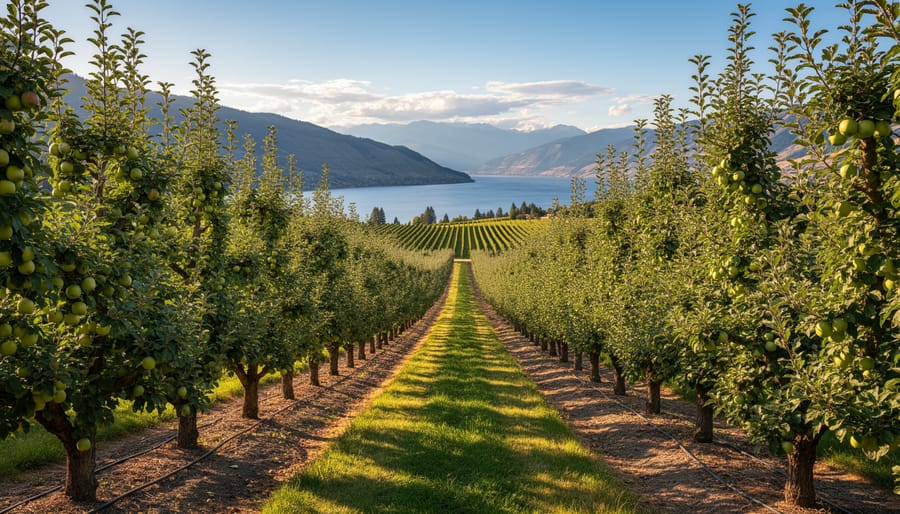
From Okanagan Orchard to Global Market
Navigating Regulatory Waters
Getting a genetically modified food product approved isn’t for the faint of heart. Neal Carter and his team spent years working through regulatory gauntlets on both sides of the border, submitting mountains of data to prove Arctic Apples were safe for consumption and the environment.
Health Canada and the USDA’s Animal and Plant Health Inspection Service scrutinized every detail. The company provided extensive feeding studies, allergenicity tests, compositional analyses, and environmental impact assessments. They had to demonstrate that silencing the browning gene didn’t create unintended consequences or alter the apple’s nutritional profile.
The Canadian approval came in 2015, followed by USDA and FDA clearances in the United States. The entire process took roughly a decade from initial concept to commercial approval, a timeline that would test any entrepreneur’s resolve.
For Okanagan entrepreneurs eyeing agricultural innovation, particularly anything involving genetic modification or novel food technologies, this journey offers critical lessons. Budget for patience and deep pockets. Regulatory approval isn’t a sprint; it’s an ultra-marathon requiring sustained resources. Document everything meticulously from day one, because regulators will ask for data you gathered years earlier.
Carter’s team also learned that transparent communication matters. They engaged with scientists, growers, and eventually consumers to explain their technology rather than hiding behind corporate walls. While they still faced opposition from anti-GMO groups, their openness helped build credibility where it counted most, with regulators who ultimately approved Arctic Apples for market.
Growing the Business Beyond the Valley
Neal Carter’s Arctic Apples needed more than regulatory approval to succeed, they needed scale. Starting from Summerland orchards, Okanagan Specialty Fruits faced the classic agricultural entrepreneur’s challenge: growing production capacity while maintaining quality and managing cash flow through the long wait for trees to mature.
The company planted orchards strategically beyond the Okanagan, establishing growing operations in Washington State where climate conditions mirrored their home valley. This expansion wasn’t just about land, it required building relationships with established growers who understood apple production but needed convincing about genetic modification. Carter spent years educating potential partners, turning skeptics into advocates through transparency about the science and sharing the vision of reduced food waste.
The 2017 acquisition by Intrexon (now Precigen) provided the capital injection needed for serious commercial scaling. Suddenly, a Summerland innovation had Silicon Valley-level funding behind it. The partnership brought business expertise and distribution networks while keeping the agricultural knowledge rooted in the Okanagan.
Getting Arctic Apples into grocery stores required a different kind of persistence. Major retailers move cautiously with novel products, especially those labeled as genetically modified. Okanagan Specialty Fruits targeted progressive chains willing to stock innovative products, starting with sliced apples in grab-and-go formats. The convenience angle worked, consumers responded to fresh-cut apples that stayed white in lunch boxes.
By 2021, Arctic Apples reached over 1,200 stores across the U.S. What began in a few Okanagan test plots had become a continental operation, proving that Valley-born agricultural innovations could compete globally when backed by patient capital and strategic partnerships.
Why the Okanagan Breeds Agricultural Innovation
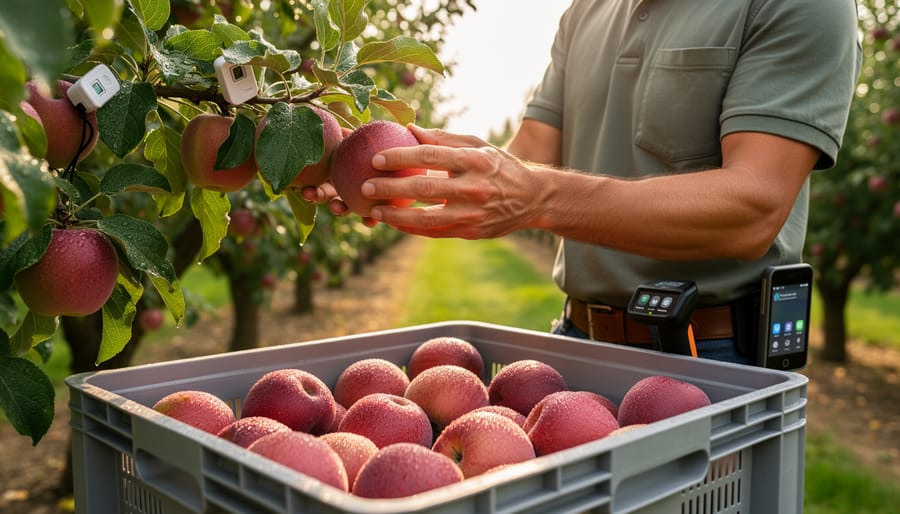
The Okanagan Valley didn’t produce a company like Okanagan Specialty Fruits by accident. The region has quietly built an ecosystem where agricultural innovation isn’t just possible, it’s almost inevitable.
At the foundation sits world-class research infrastructure. The Summerland Research and Development Centre, operated by Agriculture and Agri-Food Canada since 1914, has been developing new fruit varieties and agricultural technologies for over a century. When Neal Carter needed expertise in tree fruit genetics, he didn’t have to look far. The centre’s researchers had already spent decades breeding better apples, cherries, and other crops adapted to local conditions. This concentration of horticultural knowledge gave entrepreneurs immediate access to scientific expertise that would take years to build elsewhere.
The Okanagan climate itself functions as a natural testing ground. The Valley’s warm, dry summers and distinct seasonal temperature swings create ideal conditions for fruit development, while the semi-arid environment reduces disease pressure that plagues orchards in wetter regions. This unique setting allows innovators to trial new varieties and techniques in conditions that many fruit-growing regions can’t replicate. Understanding how climate works in the Valley has been central to developing crops that perform well elsewhere, making it an innovation laboratory with global applications.
Equally important is the Valley’s deep bench of farming expertise. Okanagan growers have cultivated fruit commercially for over 120 years, accumulating practical knowledge about rootstocks, irrigation, pest management, and orchard design. This established industry meant Okanagan Specialty Fruits could tap into experienced orchardists who understood the challenges of bringing a new variety to commercial scale. You can’t replicate that institutional knowledge overnight.
The business ecosystem supports agricultural ventures in ways less established regions struggle to match. Local banks understand orchard financing. Equipment suppliers know tree fruit operations. Packing houses and logistics networks already exist. When you’re pioneering something as novel as non-browning apples, having everything else figured out reduces risk considerably.
Perhaps most crucially, the Okanagan has cultivated a culture that values both tradition and innovation. The region respects its agricultural heritage while remaining open to new approaches. That balance, honouring what works while welcoming what’s next, creates space for ventures that might face resistance in more conservative farming communities or skepticism in areas without agricultural credibility.
The result is a place where an ambitious idea like Arctic Apples can take root, literally and figuratively, with the resources and support needed to grow into something that changes an entire industry.
Lessons for Okanagan Entrepreneurs

The Okanagan Specialty Fruits story offers a masterclass in patient, strategic entrepreneurship rooted in regional strengths. Neal Carter didn’t chase quick wins. He spent years developing Arctic Apples while navigating one of the most stringent regulatory landscapes in agriculture. That persistence paid off, but only because he understood from day one that revolutionary ideas in the food sector require both scientific rigor and public trust-building.
The first lesson is simple but hard: regulatory patience is not optional in agriculture. If your innovation touches food safety, genetics, or health claims, budget years for approvals and testing, not months. Carter spent over a decade bringing Arctic Apples to market. Entrepreneurs here should view regulatory compliance as validation, not obstruction. Each approval strengthens your credibility and market position.
Second, tap into what the Okanagan already does exceptionally well. Carter didn’t invent apples or orcharding. He innovated within an industry where the region already had century-old expertise, established growing conditions, and a respected reputation. That existing foundation gave him access to growers who understood the crop, researchers at facilities like the Summerland Research Station, and instant credibility with partners because the Okanagan name means quality fruit. Your innovation gains traction faster when it connects to the Valley’s proven strengths in agriculture, viticulture, or food production.
Third, respect tradition while you innovate. The Okanagan has deep agricultural roots and a community that values its farming heritage. Carter faced resistance from some traditional growers, but he engaged thoughtfully rather than dismissively. He positioned Arctic Apples as solving real problems for consumers and reducing waste, not as replacing conventional farming. Entrepreneurs who frame their innovations as extensions of Okanagan agricultural excellence, rather than disruptions to it, find warmer reception and better partnerships.
Finally, build relationships before you need them. Carter’s success depended on partnerships with research institutions, fellow growers, and eventually larger companies like Intrexon. The Okanagan’s relatively small, interconnected business community rewards relationship-building. Attend grower meetings, engage with regional economic development organizations, and contribute to the community. When you need support, those connections become invaluable.
Visiting the Innovation: Agricultural Tourism Opportunities
The Okanagan Valley’s agricultural innovation extends far beyond the orchard gate, creating compelling stories that draw visitors looking for experiences deeper than tasting rooms and vineyard tours. Okanagan Specialty Fruits represents a new dimension of Okanagan tourism where cutting-edge science meets the region’s farming heritage.
While you can’t tour Arctic Apple orchards the way you might visit a winery, the story itself enriches how visitors experience the Valley. Farm tours throughout the region increasingly highlight innovation alongside tradition. Orchard operators share how research from facilities in Summerland and Penticton filters down to practical farming, giving tourists a glimpse into the future of agriculture. The same visitors who attend pairing events at wineries often seek out these agricultural experiences, wanting to understand the full scope of what makes the Okanagan special.
The Summerland Research and Development Centre, where much of the Valley’s horticultural innovation happens, occasionally opens for public tours. Visitors see where new apple varieties develop and learn about the science behind frost-resistant cherries, drought-tolerant grapes, and yes, non-browning apples. These tours transform abstract concepts into tangible experiences.
Farm-gate markets and u-pick operations now tell their innovation stories too. Signs explain new growing techniques, water conservation methods, and how research shapes what ends up in your basket. It’s agricultural storytelling that gives depth to a pairing guide or wine tasting, showing how the entire region thinks about food, science, and sustainability.
For entrepreneurs visiting the Okanagan to scout opportunities, these agricultural tourism experiences provide context. They show how the Valley supports innovation from research through commercialization, making it easier to envision launching your own venture here. The farms, orchards, and research centres become living case studies in what’s possible when tradition embraces change.
The story of Okanagan Specialty Fruits proves what becomes possible when deep-rooted agricultural knowledge collides with bold innovation. Neal Carter didn’t revolutionize the apple industry from Silicon Valley or a major metropolitan hub. He did it from Summerland, in the heart of British Columbia’s fruit-growing country, drawing on generations of orchard expertise and the Valley’s established research infrastructure.
Arctic Apples emerged from soil that has nourished commercial fruit production for over a century. That foundation matters. The Okanagan didn’t just provide a scenic backdrop for this success story, it supplied the essential ingredients: experienced growers who understand fruit genetics, research facilities that support agricultural science, and a business community willing to back unconventional ideas.
This intersection of tradition and innovation defines the modern Okanagan. Yes, visitors come for the vineyards, the lakes, and the mountain scenery. But scratch beneath that postcard surface and you’ll find a region where agricultural entrepreneurs tackle global challenges. Where a local innovator can create a product that reaches grocery stores across North America. Where century-old farming wisdom informs cutting-edge biotechnology.
The Valley’s orchards and vineyards aren’t museums preserving the past. They’re living laboratories where the next generation of agricultural innovations take shape. Okanagan Specialty Fruits changed how millions of people experience apples. The question worth asking: what world-changing idea will take root here next?