How Permaculture Farming Is Transforming the Okanagan Valley

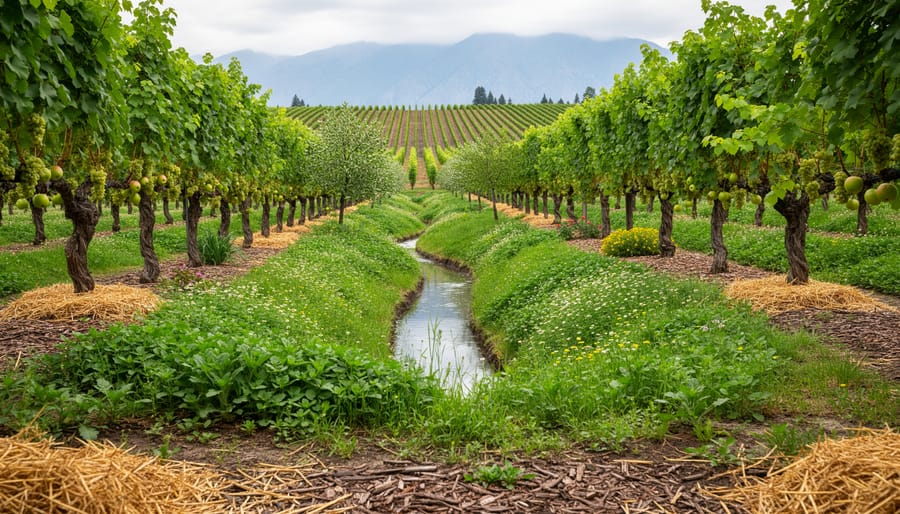
Permaculture-inspired vineyard in the Okanagan Valley with cover crops between vine rows, mulched soil, and an earth swale catching runoff near fruit trees.

Permaculture farming works by mimicking natural ecosystems to create self-sustaining agricultural systems that require fewer inputs, less water, and minimal intervention once established. Instead of fighting against nature with pesticides and constant tillage, this approach layers plants strategically, builds soil health through composting and mulching, and creates beneficial relationships between crops, trees, and livestock. The Okanagan Valley has become a testing ground for these principles, where water scarcity and microclimates push growers to rethink conventional methods.
The concept started in Australia during the 1970s but has evolved far beyond backyard gardens. Today’s …

What Climate Do Grapes Grow In (and How Does It Work)?

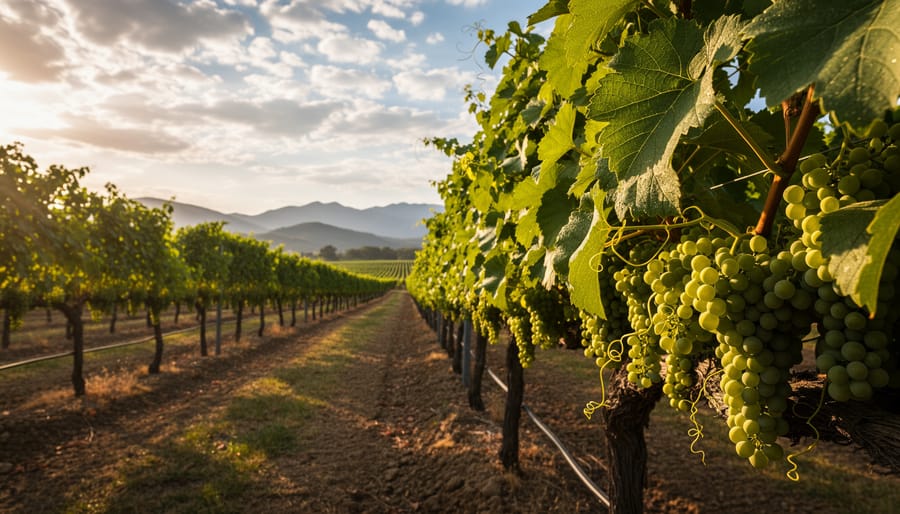
Sunlit grapevines growing on a trellis in a temperate vineyard with softly blurred hills and mountains in the background.

Grapes grow in temperate climates where warm, dry summers allow fruit to ripen fully and mild winters provide essential dormancy without killing the vines. This balance of heat, sunshine, and seasonal rhythm determines not only whether grapes survive, but whether they produce the sugars, acids, and flavor compounds that define quality wine.
Understanding grape climate requirements matters whether you’re planning a vineyard visit, considering a wine country investment, or simply curious why certain regions produce distinctive styles. Grapes are far pickier than most crops. They demand specific temperature ranges, precise amounts of sunlight, and carefully timed rainfall. Too much heat …

Highland Farming Transforms the Okanagan: What This Custom Service Model Means for Valley Growers

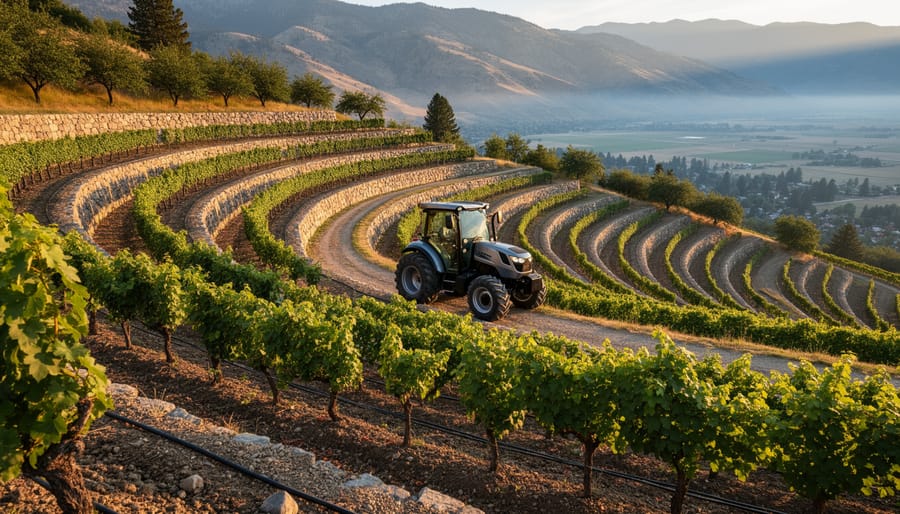
A low-center-of-gravity tractor working a terraced hillside vineyard with stone bench walls and irrigation channels in the Okanagan valley.

Highland farming transforms steep slopes and elevated benches into productive agricultural land through specialized equipment, terraced planting systems, and soil management techniques adapted to challenging terrain. If you’re wondering how growers coax premium crops from mountainside vineyards or hillside orchards, you’re exploring one of agriculture’s most demanding disciplines.
The practice has gained fresh attention in 2026 thanks to Highland Custom Farming, a Saskatchewan-based operation that’s revolutionizing how farmers approach difficult topography. Their model proves that modern equipment and expertise can make previously marginal land economically viable. …