
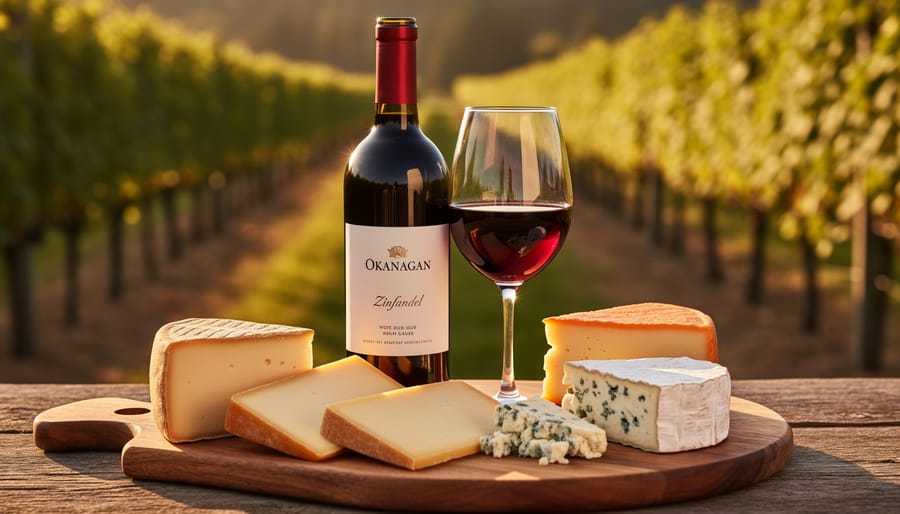
Pairing cheese with Zinfandel comes down to matching the wine’s bold, fruit-forward character and higher alcohol with cheeses that can stand up to its intensity. The best partners are aged, hard cheeses like Gouda or sharp Cheddar, semi-soft washed-rind varieties, and pungent blues that complement rather than compete with Zinfandel’s ripe berry flavors and peppery spice notes. Success hinges on balancing richness with acidity and ensuring neither the wine nor cheese overwhelms the other.
Zinfandel has earned its place as one of the Okanagan Valley’s most exciting warm-climate wines, thriving in sun-drenched vineyard sites from Osoyoos to Penticton. The same terroir that allows permaculture in the Okanagan to flourish gives this varietal the concentrated fruit character that makes it both a joy to drink and a fascinating challenge to pair with cheese. Unlike lighter wines that call for delicate accompaniments, Zinfandel demands cheese with backbone.
This guide walks you through the practical steps of creating memorable Zinfandel and cheese pairings, whether you’re planning a tasting at home or preparing for a vineyard visit. You’ll learn which cheese characteristics work best, how to structure a progression of pairings, and what pitfalls to avoid when your wine packs 15% alcohol and jammy fruit. The principles here apply equally to local Okanagan Zinfandels and bottles from elsewhere, giving you a versatile framework for confident pairing decisions.
What You’ll Need for Successful Zinfandel and Cheese Pairing
Setting up a proper Zinfandel and cheese tasting doesn’t require specialized equipment, but having the right elements on hand makes the experience smoother and more enjoyable. You’ll want to gather your materials before you start so you can focus on exploring flavors rather than scrambling for a corkscrew mid-tasting.
Start with your wines: select at least one bottle of white Zinfandel and one red Zinfandel, ideally from different Okanagan sub-regions to showcase variation. Golden Mile Bench and Naramata Bench both produce excellent expressions. If you’re exploring thoroughly, grab a lighter-style red and a bolder, higher-alcohol version to see how cheese responds to different intensity levels.
For your tasting setup, gather these essentials:
- Two bottles of Zinfandel (one white, one red) from Okanagan producers
- Four to six cheese varieties spanning mild to bold intensities
- Plain water crackers or baguette slices as neutral carriers
- Room-temperature water and apple slices for palate cleansing between tastings
- Proper wine glasses (one per person per wine, or rinse between pours)
- Cheese knives or spreaders to avoid flavor cross-contamination
- A wooden board or slate for presenting cheeses at room temperature
Choose cheeses that range from fresh and mild (chevre, young cheddar) through medium-aged varieties (Gouda, Manchego) to bold options (aged Gruyère, blue cheese). Aim for three to four ounces per person of each cheese. Look for BC-made options when possible, several Okanagan and Fraser Valley producers craft excellent cheeses that pair beautifully with regional wines.
You’ll also want small notebooks or tasting cards if you plan to record your impressions, plus small plates for each taster. Don’t forget accompaniments like honey, toasted walnuts, or Okanagan fruit preserves, which you’ll introduce strategically after testing the core wine-and-cheese combinations. Keep everything at room temperature except the wine itself, which should be served at proper drinking temperature: chilled for white Zinfandel, slightly below room temperature for red.
Understanding Zinfandel’s Flavor Profile Before You Pair
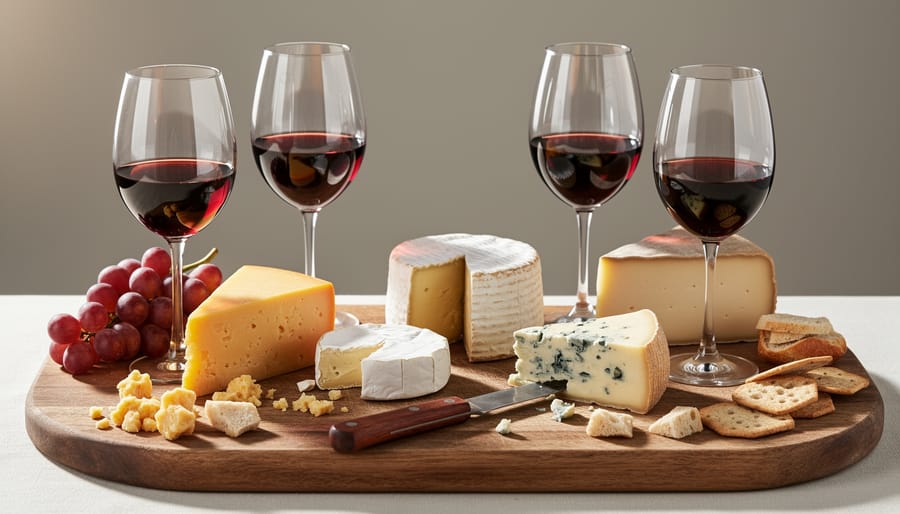
White Zinfandel Characteristics
White Zinfandel offers a completely different pairing canvas than its red counterpart. This blush-colored wine presents a light, fruit-forward profile dominated by strawberry, watermelon, and honeydew melon flavors. The Okanagan grape climate produces white Zinfandel with bright acidity that cuts through creamy textures beautifully, making it ideal for fresh, mild cheeses.
The wine’s slight residual sweetness, typically ranging from 1.5 to 3 percent, balances salty and tangy cheese profiles without overwhelming delicate flavors. Unlike red Zinfandel’s bold tannins, white Zinfandel’s minimal tannin structure means you can pair it with soft-ripened cheeses that would clash with heavier reds. Alcohol content sits lower too, usually 9 to 11 percent, creating a gentler interaction with cheese fats.
The refreshing quality comes from careful harvest timing and Okanagan farming practices that preserve natural acidity while developing fruit character. This acidity acts as a palate cleanser, making white Zinfandel particularly effective for starting a progressive tasting that moves from lighter to bolder pairings.
Red Zinfandel Characteristics
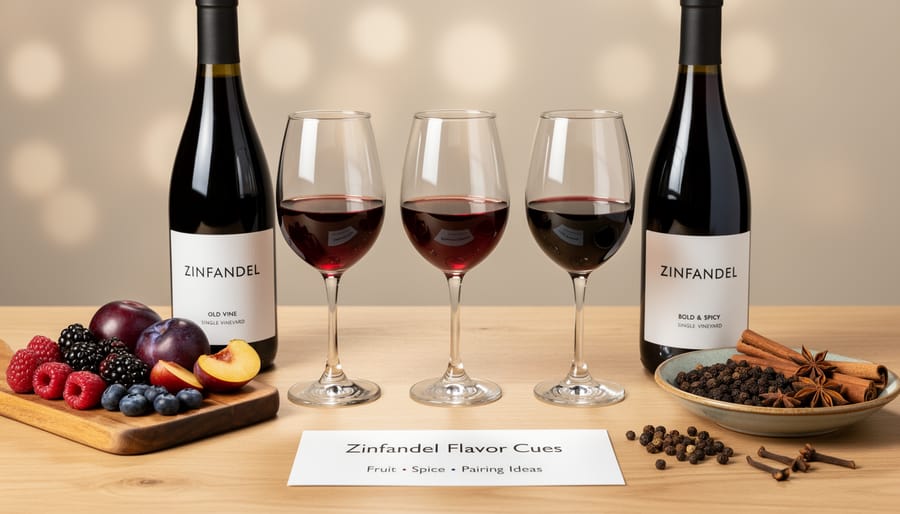
Red Zinfandel stands in bold contrast to its lighter counterpart, delivering a powerful, fruit-forward punch that defines the varietal. Expect intense jammy flavors, ripe blackberry, dark cherry, and plum dominate the palate, often accompanied by notes of raspberry jam or even dried fruit in warmer vintages. This concentrated fruitiness stems from Zinfandel’s tendency to ripen unevenly, creating a mix of raisined and fresh fruit character in a single cluster.
The wine’s signature peppery spice adds complexity. You’ll frequently taste black pepper, clove, and sometimes a touch of cinnamon or anise, particularly in Okanagan expressions where cooler nighttime temperatures preserve these aromatic compounds. The spice element intensifies as the wine ages.
Alcohol levels run medium to high, typically 14.5% to 16%, occasionally higher. This warmth coats your palate and plays a crucial role in pairing, it can either complement rich, fatty cheeses beautifully or overwhelm delicate options.
Tannins range from moderate to high depending on winemaking style and oak treatment. They provide structure and grip, creating that slightly drying sensation on your gums and tongue. This tannic backbone demands cheese with enough fat and protein to soften the astringency.
Okanagan red Zinfandels often show slightly more restraint than their California cousins due to our shorter growing season, resulting in balanced acidity alongside the bold fruit, an advantage when pairing with cheese, as the acidity cuts through richness without the wine feeling heavy.
Important Pairing Considerations and Common Pitfalls
Even small missteps can turn a promising pairing into a disappointing mismatch. The most frequent mistake is serving cheese straight from the refrigerator. Cold temperatures mute flavor compounds and stiffen fat molecules, preventing the creamy texture and aromatic complexity that make cheese shine alongside wine. Remove cheese from the fridge at least 45 minutes before serving, at room temperature, fats soften and volatile flavor compounds become detectable, allowing the pairing to work as intended.
Overpowering combinations wreck balance. Aggressive blue cheeses such as Roquefort can dominate fruity white Zinfandel, while pairing bold, peppery red Zinfandel with mild mozzarella wastes the wine’s intensity and leaves the cheese tasting flat. Match intensity levels: light wines with subtle cheeses, robust wines with assertive varieties.
Temperature mistakes extend to the wine itself. Serving red Zinfandel too warm amplifies alcohol heat and makes the pairing taste harsh, while over-chilling white Zinfandel deadens its fruit character. Aim for 60-65°F for reds and 45-50°F for whites.
Ignoring texture creates friction. Crumbly aged cheeses can clash with high-tannin Zinfandels if you don’t account for the wine’s drying effect, counter this by choosing creamy, high-fat options that coat the palate. Conversely, super-soft triple-crèmes can smother lighter Zinfandels.
Finally, rushing the tasting disrupts evaluation. Tasting wine immediately after a pungent cheese (or vice versa) prevents you from perceiving either accurately. Cleanse your palate with water or plain bread between samples, and always taste the wine alone first to establish a flavor baseline before introducing cheese.
Step-by-Step Cheese Pairing Process
Step 1: Prepare Your Cheeses and Wine
Take your cheeses out of the refrigerator 45 to 60 minutes before tasting. Cold cheese mutes flavor and hardens fat, making it impossible to judge texture or taste properly. Arrange them on a wooden board or neutral white plate in order from mildest to strongest, left to right.
Open red Zinfandel 15 to 20 minutes before pouring to let volatile compounds dissipate, especially if the bottle is young or shows high alcohol. White Zinfandel needs no breathing time. Pour small tastings, about two ounces per glass, to avoid palate fatigue.
Set out water, plain crackers or bread, and separate knives for each cheese to prevent flavor transfer. Place a notebook nearby to record what works. Start with clean glassware and ensure the room temperature sits between 65 and 70 degrees Fahrenheit so nothing tastes flat or overly sharp.
Step 2: Start with White Zinfandel Pairings
Begin your pairing journey with white Zinfandel and lighter cheeses, which provide a gentle introduction to the matching process. Pour a small amount of wine first, about two ounces, and let it sit while your cheeses reach room temperature.
Start with fresh chèvre, a creamy goat cheese that complements white Zinfandel’s strawberry and melon notes without overwhelming its delicate profile. Take a sip of wine alone, noting the fruit flavors and slight sweetness. Next, taste a small piece of cheese by itself, paying attention to its tangy, clean finish. Now sip the wine again with cheese still on your palate. The wine’s acidity should cut through the cream while the cheese softens any sharper edges in the wine.
Move next to mild cheddar or Havarti, both offering subtle nutty flavors. The wine’s fruit character becomes more pronounced against these buttery textures. If the pairing feels flat or the wine tastes too sweet, the cheese might be too mild, a signal to adjust your next selection slightly bolder.
Step 3: Progress to Medium-Intensity Cheeses
Once your palate is warmed up, shift to red Zinfandel and cheeses with more developed flavors. This is where the wine’s jammy fruit and peppery spice really start to shine.
Choose semi-soft or medium-aged cheeses with some complexity but not overwhelming sharpness. Gouda aged six to twelve months works beautifully, its caramel notes echo Zinfandel’s ripe berry sweetness while its creamy texture softens the wine’s alcohol. Young Manchego, aged around three months, brings nutty undertones that complement the wine’s spice without competing. Fontina offers a buttery richness that bridges the wine’s fruit-forward character with earthy depth.
Take a sip of red Zinfandel first, noting the blackberry and pepper. Then taste the cheese alone, paying attention to its fat content and any crystalline texture. Finally, combine them. You’re looking for the cheese to mellow the wine’s heat while the wine cuts through the cheese’s richness. The fruit should enhance, not overpower, the cheese’s natural flavors. If the pairing feels heavy, add a slice of fresh pear between bites to reset.
Step 4: Explore Bold, Aged Cheese Pairings
Now that you’ve worked through lighter pairings, it’s time to match your red Zinfandel with cheeses that can stand up to its power. Aged cheeses, those with 12 months or more of maturation, develop crystalline texture, concentrated flavors, and higher fat content that tame Zinfandel’s alcohol and tannins beautifully.
Start with a two-year aged cheddar. The sharp, nutty bite cuts through the wine’s jammy fruit, while the cheese’s fat coats your palate and softens the alcohol burn. Notice how the tannins grab onto the cheese’s proteins, creating a cleaner finish than either element alone.
Move to Gruyère next. This Swiss cheese brings earthy, caramelized notes that echo Zinfandel’s peppery spice. The firmer texture requires more chewing, which releases oils that mellow the wine’s intensity.
Finish with aged Gouda, ideally 18 to 24 months old. Its butterscotch sweetness and crunchy tyrosine crystals complement the wine’s dark fruit, while its umami depth makes the pairing feel almost meaty. This is where high-alcohol Zinfandel truly shines, as the cheese’s richness needs that boldness to avoid being cloying.
Step 5: Try Blue Cheese and Spiced Varieties
Blue cheese creates one of the most dramatic matches with red Zinfandel. The wine’s jammy fruit sweetness counterbalances the sharp, salty punch of Gorgonzola or Stilton, while its peppery spice notes harmonize with the cheese’s pungent character. This combination works because the high alcohol and residual fruit cut through the cheese’s intensity without being overwhelmed.
Start with a small piece of room-temperature blue cheese. Taste the Zinfandel first, noting its berry flavors. Then take a bite of cheese, letting it coat your palate. Finish with another sip of wine. The transformation is immediate, the wine tastes smoother and fruitier, the cheese less aggressive.
Pepper-crusted cheeses like cracked black pepper Toscano amplify Zinfandel’s natural spice. The wine’s bold profile stands up to the heat, creating a warming, layered experience. These pairings suit confident palates and pair well with roasted nuts or fig preserves as accompaniments.
Step 6: Add Accompaniments Strategically
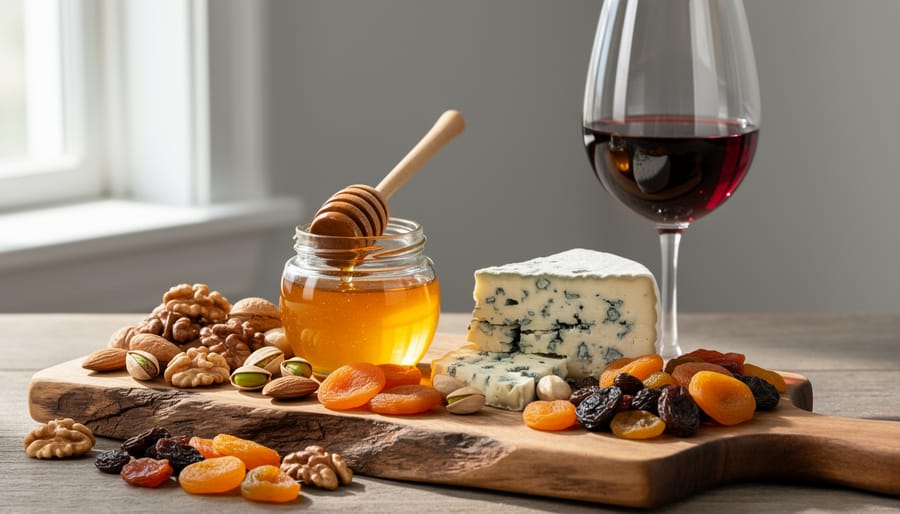
The right accompaniments transform a simple pairing into a complete tasting experience by creating flavor bridges between wine and cheese. Add thin slices of fresh pear or apple alongside milder cheeses to echo Zinfandel’s fruit notes. Drizzle local Okanagan honey over aged Gouda or cheddar, the sweetness balances the wine’s spice while amplifying its jammy character. Scatter toasted walnuts or pecans on your board; their earthy richness complements red Zinfandel’s bold structure without competing.
Okanagan fruit chutneys and preserves work exceptionally well. Try apricot preserves with semi-soft cheeses, or cherry chutney with aged varieties, both mirror Zinfandel’s stone fruit and berry profiles. Add a few dried figs or dates when serving blue cheese pairings; their concentrated sweetness tames pungent flavors while harmonizing with the wine’s alcohol warmth. Arrange accompaniments in small portions so they enhance rather than overwhelm the cheese and wine relationship.
Best Cheese Varieties for Zinfandel (Tested Matches)
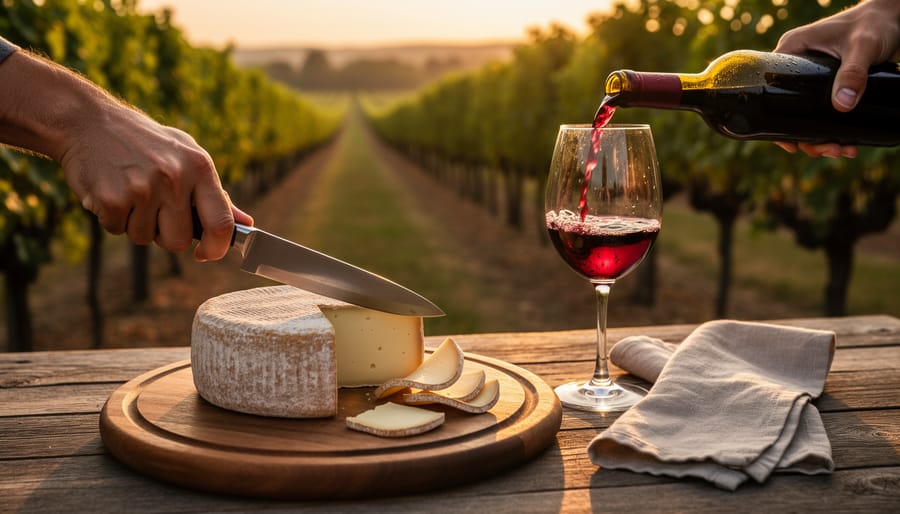
After testing dozens of combinations, certain cheese varieties consistently deliver excellent results with Zinfandel. The recommendations below are organized by wine style, with British Columbia and Okanagan options noted where available.
For white Zinfandel, fresh and mild cheeses work beautifully. Chevre from local producers like Carmelis Goat Cheese Artisan in Kelowna offers the perfect creamy tang to complement the wine’s strawberry and melon notes. The slight acidity in fresh goat cheese mirrors the wine’s crisp finish. Mild white cheddar from Armstrong Cheese provides a buttery base that lets the wine’s fruit shine without competing. Havarti, particularly dill or plain varieties, brings a subtle creaminess that softens the wine’s sweetness while adding textural interest.
Red Zinfandel opens up a broader range of possibilities. Medium-aged Gouda from Golden Ears Cheesecrafters balances the wine’s jammy fruit with nutty caramelized notes. The cheese’s slight sweetness harmonizes with Zinfandel’s ripe blackberry flavors, while its firm texture stands up to the wine’s alcohol content. Young Manchego offers a similar profile, with grassy undertones that play nicely against peppery spice notes.
For bolder red Zinfandels, especially those from warmer Okanagan sub-regions, aged cheeses create spectacular matches. Three-year aged cheddar from Balderson or locally-aged varieties develop sharp, crystalline textures that the wine’s fruit cuts through beautifully. The high fat content in aged cheddar tempers Zinfandel’s tannins, creating a smooth, lingering finish. Aged Gruyère brings complex, nutty depth that complements the wine’s oak aging, particularly in reserve bottlings.
Blue cheeses represent the adventurous end of Zinfandel pairing. Creamy Gorgonzola dolce balances the wine’s sweetness with pungent, earthy notes, while the wine’s fruit prevents the cheese from overwhelming your palate. Stilton works similarly, especially when paired with darker, spicier Zinfandels. The wine’s residual sugar and alcohol cut through the cheese’s intensity, creating surprising harmony.
Specialty options expand your pairing repertoire further. Pepper-crusted cheeses echo Zinfandel’s natural spice, creating a layered tasting experience. Smoked Gouda from BC producers mirrors the toasty oak characteristics in barrel-aged Zinfandels. For truly local experiences, seek out seasonal offerings from Little Qualicum Cheeseworks or Natural Pastures, whose small-batch production often yields unique textures that interact differently with Okanagan Zinfandels compared to mass-produced alternatives.
The key across all these pairings is fat content and flavor intensity matching the wine’s body and fruit concentration.
How to Know Your Pairing Works: Testing and Refinement
A successful Zinfandel and cheese pairing reveals itself through multiple sensory cues that you can learn to recognize with practice. Start by taking a sip of wine alone, then a bite of cheese alone, and finally combine them with a small piece of cheese followed by another sip. Pay attention to what happens in that combined moment.
- Flavors complement rather than compete, with neither overwhelming the other
- Pleasant aftertaste that lingers without bitterness or chemical notes
- Cheese and wine enhance each other’s characteristics, bringing out hidden nuances
- Balanced mouthfeel where the cheese’s fat softens tannins without feeling greasy
When the pairing works, you’ll notice the wine’s fruit becomes more pronounced, the cheese tastes creamier or nuttier, and the finish feels clean rather than cloying. If the wine tastes sour or metallic after the cheese, or if one element completely disappears, that pairing needs adjustment.
Keep a simple tasting journal noting which combinations you enjoyed and why. Write down the cheese name, producer, wine details, and a few words about the experience. This record becomes invaluable as you develop your palate and discover patterns in what appeals to you personally.
Don’t hesitate to adjust pairings mid-session. If an aged cheddar feels too sharp with your Zinfandel, add a drizzle of honey or swap to a younger version. Trust your own preferences over rigid rules, and remember that context matters, what works for a casual evening differs from a formal tasting.
Once you’ve built confidence through home practice, seek out professional experiences. Many Okanagan wineries offer guided pairing sessions where sommeliers explain their choices and introduce you to local artisan cheeses. Check regional wine tasting events throughout the year for opportunities to refine your skills alongside experts. Hosting your own tasting for friends transforms your learning into shared discovery, allowing you to test multiple pairings and gather feedback on what resonates with different palates.
Frequently Asked Questions
Before you host your first Zinfandel and cheese tasting, a few practical questions naturally come up. Here’s what you need to know to plan a successful pairing session, whether you’re exploring at home or preparing for an Okanagan winery visit.
Can I pair Zinfandel with soft cheese?
Yes, soft cheeses work beautifully with Zinfandel. Fresh chèvre, Brie, and Camembert complement white Zinfandel’s light profile, while creamy triple-cream cheeses balance red Zinfandel’s tannins and spice.
What’s the best cheese for sweet white Zinfandel?
Fresh chèvre or young feta are ideal because their mild tang contrasts with the wine’s sweetness without overpowering it. Light Havarti also works well, offering a buttery texture that harmonizes with the strawberry notes.
Where can I find Okanagan cheeses for pairing?
Visit the Okanagan Farmers’ Markets in Kelowna, Penticton, or Oliver for local artisan cheeses. The Village Cheese Company in Armstrong and Upper Bench Estate Winery’s cheese shop both offer regionally-produced options perfect for Zinfandel pairing.
How much cheese should I serve per person?
Plan for 75 to 100 grams total cheese per person if pairing is the main focus, selecting three to five varieties. For events where cheese accompanies other food, 50 grams per person is sufficient.
Can I prepare cheese pairings in advance?
You can cut and arrange cheeses up to two hours ahead if kept covered at room temperature. Remove from refrigeration 45 minutes before serving to ensure proper texture and flavor development.
Does Zinfandel pair well with aged cheddar?
Red Zinfandel pairs exceptionally well with aged cheddar, especially 18-month to three-year varieties. The wine’s bold fruit and alcohol cut through the cheese’s crystalline texture and sharp, nutty flavors.
These answers should give you confidence to start experimenting. If you want additional pairing inspiration beyond cheese, exploring how professionals structure tasting events can expand your approach.
Storage matters too. Keep opened Zinfandel sealed in the refrigerator for up to three days, though red Zinfandel tastes best consumed within 24 hours. Wrap cut cheese tightly in wax paper rather than plastic wrap to let it breathe while preventing drying. Hard cheeses last a week this way, while soft varieties should be eaten within three days.
For larger gatherings, label each cheese with variety and origin so guests understand what they’re tasting. This detail elevates the experience from casual snacking to intentional exploration, especially when showcasing British Columbia producers alongside your Zinfandel selections.
Pairing cheese with Zinfandel doesn’t require advanced sommelier training or expensive equipment. With the step-by-step process outlined here, you have everything needed to create memorable combinations in your own kitchen. The beauty of this skill lies in experimentation, each tasting teaches you something new about how flavors interact and which balances speak to your personal preferences.
The Okanagan Valley offers unique advantages for exploring these pairings. Local wineries across Golden Mile Bench and Naramata Bench produce exceptional Zinfandels that reflect our distinctive terroir, while BC cheesemakers craft artisan varieties perfect for pairing. Visiting these producers in 2026 adds dimension to your learning, as winemakers and tasting room staff share insights you won’t find in any guide.
Start simple with a fresh chèvre and white Zinfandel, then gradually work toward bolder combinations as your confidence grows. Keep notes on what works, adjust based on what you discover, and don’t hesitate to break traditional rules if something tastes right to you. The best pairing is ultimately the one you enjoy most, and building that knowledge transforms wine tasting from intimidating ritual into genuine pleasure you can share with others.