
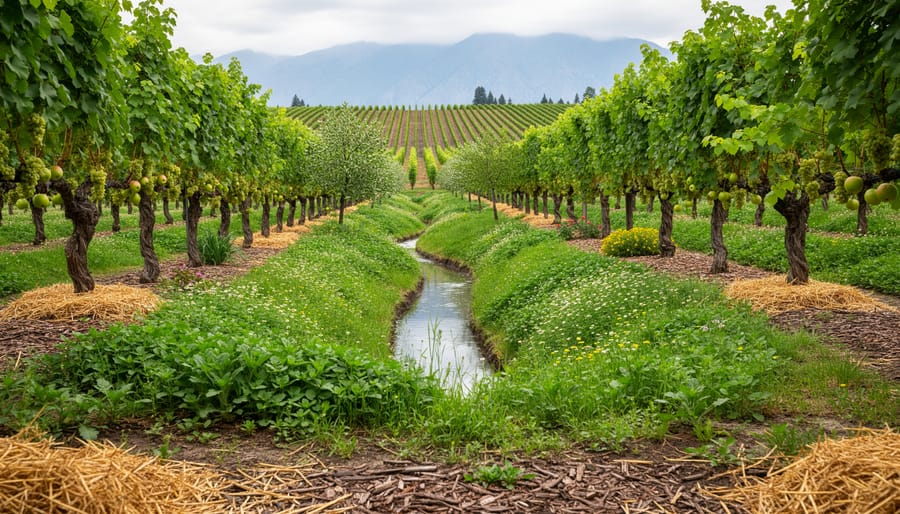
Permaculture farming works by mimicking natural ecosystems to create self-sustaining agricultural systems that require fewer inputs, less water, and minimal intervention once established. Instead of fighting against nature with pesticides and constant tillage, this approach layers plants strategically, builds soil health through composting and mulching, and creates beneficial relationships between crops, trees, and livestock. The Okanagan Valley has become a testing ground for these principles, where water scarcity and microclimates push growers to rethink conventional methods.
The concept started in Australia during the 1970s but has evolved far beyond backyard gardens. Today’s permaculture farms range from small-scale homesteads to commercial operations producing everything from wine grapes to heritage vegetables. What makes the system work is observation. Farmers spend seasons watching how water moves across their land, where frost settles, which areas stay moist longest. Then they design accordingly, placing water-hungry crops in natural collection zones and drought-tolerant perennials on sun-baked slopes.
Here in the valley, several vineyards and orchards have quietly adopted permaculture practices without necessarily flying the flag. You’ll spot the signs: cover crops between vine rows, chickens clearing pest insects in dormant orchards, swales catching spring runoff. The techniques address real problems facing regional growers in 2026, particularly around irrigation costs and soil degradation from decades of monoculture.
Whether you’re visiting farms this summer, considering a career shift into agriculture, or simply curious about where your food originates, understanding permaculture offers insight into how the valley’s agricultural landscape is adapting. The methods aren’t mysterious or exclusively for idealists. They’re practical solutions born from watching how forests and grasslands have thrived here for millennia without human intervention.
What Makes Permaculture Different from Conventional Farming
Traditional Okanagan orchards march in tidy rows, apples here, cherries there, grass mowed short between them. It’s efficient, predictable, and perfectly suited to mechanical harvesting. Permaculture farming looks messier at first glance, but that apparent chaos hides a different kind of order entirely.
The core difference comes down to partnership versus control. Conventional agriculture typically relies on standardized inputs, fertilizers, irrigation schedules, pest management protocols, applied across uniform plantings. You’re essentially overriding the site’s natural conditions to create ideal growing environments. Permaculture instead starts with careful observation of what already thrives there: which corners hold moisture, where frost settles first, how water moves across the land during spring runoff.
Those observations shape design decisions guided by the fundamental principles of permaculture working with natural patterns rather than imposing artificial ones. In the Okanagan, that might mean positioning drought-tolerant plants on exposed south-facing slopes while tucking water-lovers into shaded draws where morning dew lingers.
Understanding a few key concepts helps clarify how permaculture systems function:
- Zones
- Areas organized by how often you visit them. High-maintenance herbs go near the kitchen door; hardy nut trees occupy outer zones you check monthly.
- Guilds
- Groupings of plants that support each other, like planting nitrogen-fixing clover beneath apple trees to feed the soil while attracting pollinators.
- Polyculture
- Growing multiple species together instead of monoculture blocks. A peach tree might share space with comfrey, strawberries, and chives.
- Food Forests
- Layered plantings mimicking woodland structure, with fruit trees forming the canopy above berry shrubs, perennial vegetables, and ground covers.
Where a conventional cherry orchard might cover five acres with a single variety, a permaculture approach could integrate cherries with nitrogen-fixing Siberian pea shrubs, shade-tolerant currants below, and pollinator strips along edges. The cherry harvest might be smaller per tree, but the total system produces fruit, nitrogen, habitat, and soil improvement simultaneously.
Neither approach is inherently superior, conventional methods feed the world efficiently, and Okanagan growers have perfected them over generations. Permaculture offers different strengths: resilience through diversity, reduced external inputs, and systems that improve rather than deplete the land over decades. Some Valley farmers are finding the two approaches complement each other, borrowing permaculture principles to enhance sections of conventional operations.
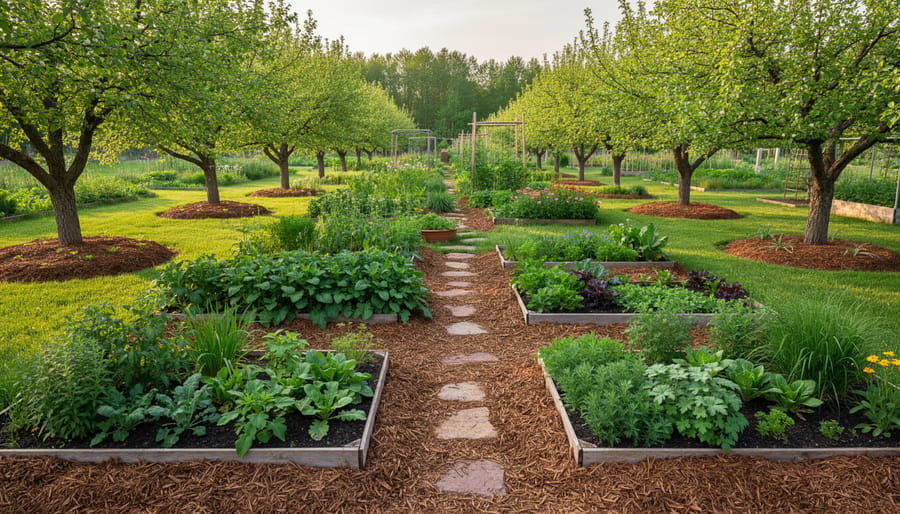
Why the Okanagan Climate Is Perfect for Permaculture Systems
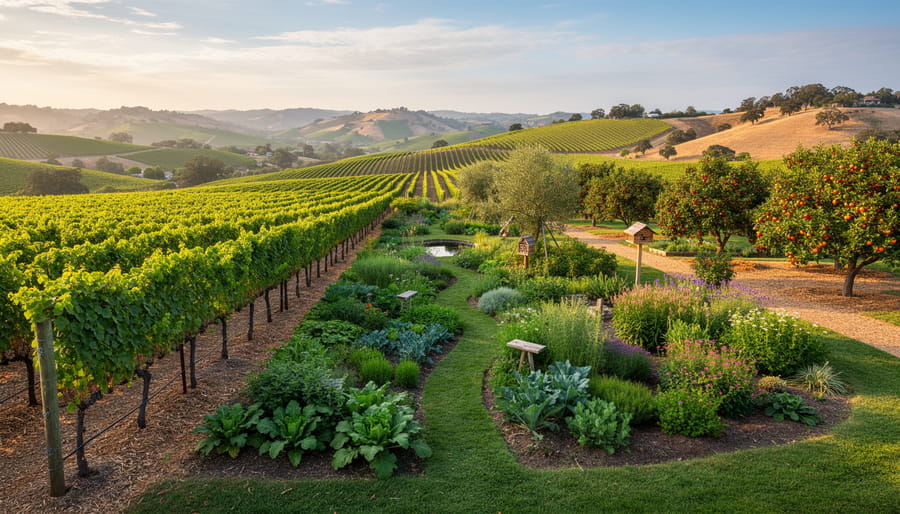
The Okanagan’s semi-arid climate, with its long, sun-drenched summers and relatively mild winters, creates conditions that permaculture practitioners consider nearly ideal. The valley receives only 12 to 16 inches of annual precipitation in most areas, forcing every farming system to confront water scarcity head-on. This challenge makes permaculture’s water-conserving design principles not just attractive but essential for long-term sustainability.
Permaculture systems excel here because they work with the natural water flow patterns that define the valley’s diverse terrain. From the elevated benches where many vineyards thrive to the valley floor where traditional orchards and vegetable operations cluster, each elevation zone presents distinct microclimates and moisture conditions. Permaculture designers use swales, contour planting, and mulching strategies to capture and slow water movement downslope, allowing maximum infiltration where it falls rather than watching precious rainfall run off into the lake.
The same climate factors that make the Okanagan grape climate exceptional also support diverse permaculture food forests and polyculture systems. The valley’s 2,000-plus annual sunshine hours provide abundant energy for productive guilds of fruit trees, nitrogen-fixing shrubs, perennial vegetables, and beneficial insect habitats. These layered systems create their own microclimates through strategic placement, using taller plants to shade moisture-loving species beneath while windbreaks reduce evapotranspiration across the site.
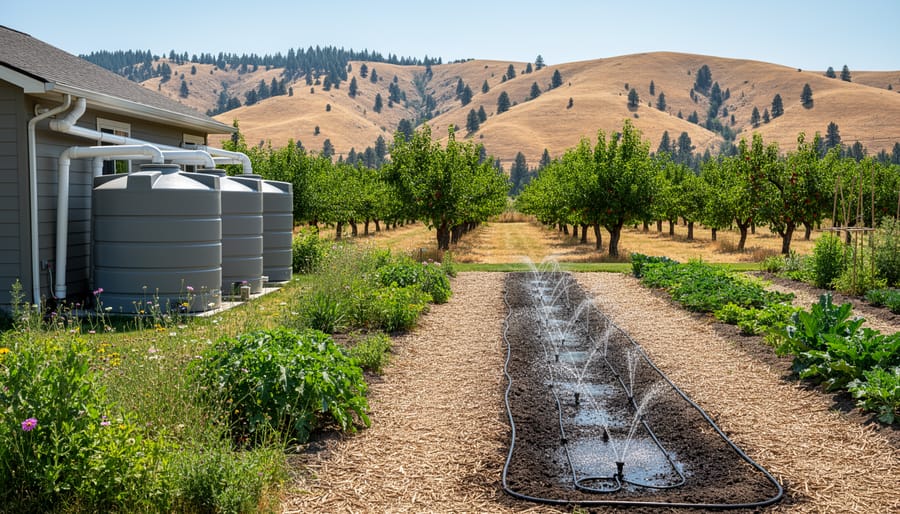
Water conservation matters especially now, as the Okanagan Basin water stressed by increasing demand and variable snowpack threatens conventional irrigation-dependent agriculture. Permaculture’s emphasis on building soil organic matter, selecting drought-tolerant species adapted to the bioregion, and creating water-harvesting landscapes addresses these constraints directly. The approach transforms the valley’s aridity from a limitation into a design driver, producing resilient systems that thrive precisely because they’re calibrated to the place rather than imposed upon it.
Permaculture Farms You Can Visit in the Valley
Educational Workshops and Farm Tours
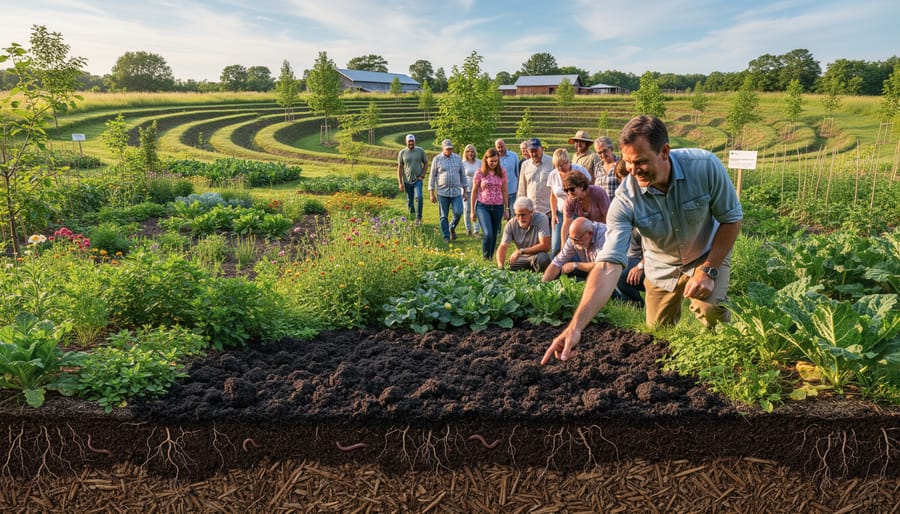
Workshops at Okanagan permaculture farms range from half-day introductions to multi-day intensives, each designed to get your hands dirty while learning practical techniques. Spring sessions typically focus on garden planning, soil building, and early-season planting strategies, you’ll learn to read your land’s microclimates and design productive systems that work with the Valley’s conditions. Summer workshops dive into water harvesting, mulching techniques, and managing the challenges of our dry season, while autumn offerings cover seed saving, food preservation, and preparing systems for winter dormancy.
Most farms structure their tours around active work areas rather than pristine display gardens. You might find yourself helping establish a hugelkultur bed, observing beneficial insect populations in companion plantings, or learning to identify volunteer plants worth keeping versus those competing with your crops. The hands-on approach means leaving with skills you can apply immediately, whether you’re managing vineyard edges, designing a backyard food forest, or simply understanding how natural systems function.
Several operations pair farm tours with tastings, imagine discussing guild planting strategies over estate-grown fruit wines, or exploring wine pairing ideas that incorporate permaculture-grown herbs and edibles. These experiences blend the Valley’s established wine tourism with emerging agricultural methods, creating learning opportunities that feel less like classroom instruction and more like spending an afternoon with knowledgeable neighbors who’ve figured out how to work with this land rather than constantly fighting it.
Learning Permaculture: Courses Available in 2026
The Okanagan’s permaculture learning landscape has expanded significantly, offering both locals and visitors pathways to master these sustainable growing methods. Whether you’re a tourist extending your Valley stay to build new skills or a resident ready to transform your property, educational options now span from intensive multi-week programs to weekend workshops at working farms.
The most comprehensive opportunity this year is a 9-week online course running from June 30 through August 25, 2026. Organized by Bill Wilson, this summer program makes permaculture education accessible regardless of where you’re staying in the Valley. The sliding scale tuition of $895 to $1,295 reflects a pay-what-you-can model that opens the door to students with different financial circumstances.
| Course Element | Details |
|---|---|
| Session Dates | June 30 – August 25, 2026 |
| Format | Online |
| Duration | 9 weeks |
| Tuition | $895 – $1,295 (sliding scale) |
A typical 9-week permaculture course covers design principles, soil building, water management systems, and creating productive plant guilds. You’ll learn to read landscapes the way Okanagan permaculture farmers do, identifying microclimates and planning zones that minimize work while maximizing yields. Most programs include design projects where you apply concepts to real properties, making the education immediately practical.
Beyond formal courses, the Permaculture Institute of North America (PINA) maintains a continent-wide events calendar covering workshops, farm tours, and skill-shares happening across North America. This resource helps you find shorter learning opportunities that might align with your travel schedule or let you explore specific techniques like greywater systems or food forest establishment without committing to a full certification program.
From Vineyards to Food Forests: Integration in Wine Country
Some forward-thinking Okanagan vintners are discovering that permaculture principles don’t compromise their premium wines, they enhance them. By treating vineyards as ecosystems rather than monocultures, these growers are finding that biodiversity and wine quality can coexist beautifully.
The shift starts with companion planting between vine rows. Instead of bare soil or uniform cover crops, some estates now grow diverse mixes of flowering plants that attract beneficial insects while adding organic matter. Yarrow, buckwheat, and phacelia bring in predatory wasps and lacewings that manage pest populations without chemical sprays. The flowers also support native pollinators, creating a living insurance policy for nearby fruit orchards.
Hedgerows and insectary strips at vineyard edges serve as permanent habitat for these beneficial species. Rather than spraying for leafhoppers or spider mites, growers let ladybugs and predatory mites do the work. One unexpected benefit: these diverse plantings seem to contribute subtle complexity to the wines, though whether that’s through soil biology or reduced chemical residues remains a conversation among winemakers over tastings.
The principles extend to orchard systems too. Apple and cherry growers are layering their operations vertically, nitrogen-fixing shrubs beneath fruit trees, with herbs and groundcovers forming a living mulch. This stacking mimics forest structure and builds soil while producing multiple yields. The microclimates for vineyards that make the Okanagan so suitable for wine grapes also support these layered food forest designs, where careful plant selection matches each slope’s specific conditions.
Water management drives much of this integration. Swales planted with perennials capture runoff and recharge groundwater rather than letting irrigation water race downhill. These earthworks double as wildlife corridors and wind breaks, protecting tender crops while reducing erosion.
The challenge lies in balancing experimentation with commercial reality. Vineyard managers can’t risk a vintage on untested methods, so integration happens gradually, a few rows here, a hedgerow there. Yet the growers who’ve committed say they’re not looking back.
What Permaculture Means for the Valley’s Agricultural Future
The Okanagan’s agricultural landscape has always adapted to changing conditions, from the first irrigation flumes carved into hillsides to modern precision viticulture. Permaculture farming represents the next chapter in this evolution, offering practical tools for the challenges ahead.
Water scarcity tops the list of concerns for Valley growers. As summer droughts intensify and water allocations tighten, permaculture’s emphasis on retention ponds, swales, and moisture-conserving mulches becomes less experimental and more essential. These systems don’t just reduce irrigation demands, they build soil that holds water like a sponge, buffering crops through dry spells that would stress conventionally managed land.
Climate resilience extends beyond water. Diversified permaculture systems spread risk across multiple crops and revenue streams, a hedge against the market volatility and weather extremes that can devastate monocultures. This approach appeals to younger farmers entering the Valley, many of whom prioritize ecological sustainability alongside profitability. The model also integrates naturally with existing operations through custom farming services that allow landowners to transition gradually without abandoning proven practices.
The agritourism angle matters too. Visitors increasingly seek authentic experiences that go beyond tasting rooms, and permaculture farms deliver: edible landscapes, working ecosystems, hands-on workshops. These attractions complement wine country’s offerings while drawing a demographic interested in sustainability and local food systems.
Challenges remain real. Permaculture demands more knowledge and observation than spray schedules provide, and initial establishment takes patience. Labor patterns differ from conventional farming, and financing remains tricky for systems that mature over years rather than seasons. Still, the principles align remarkably well with what has always made Okanagan agriculture work: careful attention to microclimates, creative water management, and willingness to innovate when conditions demand it.
The Okanagan has always been a place where innovation meets tradition, where pioneers tested new crops and techniques against a landscape that demanded creativity. Permaculture farming represents the latest chapter in that story, a movement that’s quietly reshaping how the Valley thinks about agriculture, sustainability, and its relationship with the land.
Whether you’re a tourist adding farm visits to your winery itinerary, a resident exploring backyard food production, or someone considering investment in regenerative agriculture, the permaculture movement here offers tangible ways to engage. The farms welcoming visitors aren’t just showcasing alternative methods; they’re proving that working with natural systems can be both practical and profitable in this climate. The educational courses emerging across the region signal growing local expertise and commitment to these principles.
What makes this particularly Okanagan is how permaculture integrates with rather than replaces the Valley’s agricultural identity. It’s not about abandoning vineyards for food forests, but about enriching existing systems with ecological wisdom. The same microclimates that make world-class wine now support diverse, resilient farms that conserve water, build soil, and create habitat alongside productive landscapes.
As climate pressures mount and visitors increasingly seek authentic sustainable experiences, permaculture positions the Okanagan as more than a scenic destination, it’s becoming a living laboratory where ancient principles meet contemporary agriculture. That’s an evolution worth witnessing, whether you spend a weekend here or call the Valley home.